Good brake service comes down to three parts. Pads, rotors, and fluid. If your brakes squeal, grind, pulse, or feel soft, have them measured soon. A mobile mechanic can do the whole job in your Rio Rancho or Albuquerque driveway.
At a glance
- Squealing means book a check. Grinding means stop driving if you can.
- Pads wear first. Rotors get replaced when they are thin, scored, or warped.
- Most cars need a brake fluid change every two to three years.
- Measure first, then replace only what is worn.
Your brakes are the one system on the car you cannot put off. A weak battery leaves you stuck. Weak brakes put you into the car in front of you. The good news is that brakes give plenty of warning before they fail, and most brake work is simple, quick, and easy to do right where the car sits.
This guide covers what to listen and feel for, how pads and rotors differ, why brake fluid matters, what a mobile brake job looks like step by step, and what drives the price. If you already know you need work, the brake service page has the details on what Matt does at your address, or you can call (505) 608-6677.
Why Brakes Work Harder Here
The Albuquerque metro is hard on brakes in a few ways that drivers in flat, cool cities never think about.
First, there are hills. Rio Rancho sits up on the mesa above the river. Drive down Southern, Northern, or Paseo del Norte toward the valley and your brakes do real work the whole way. Tramway and the streets in the foothills are steep too. On I-40, Nine Mile Hill on the west side of Albuquerque is a long grade. Long downhill runs heat brakes up, and heat is what wears pads fast and warps rotors.
Second, there is the summer heat. Hot days mean hot pavement and hot wheels. Brakes that are already warm have less room to soak up more heat before they start to fade.
Third, there is dust and grit. Wind blows fine sand into everything, including the brakes. Grit between a pad and a rotor acts like sandpaper. It also gets into the slide pins that let the caliper move, and a sticky pin makes one pad wear much faster than the other.
None of this means your brakes will fail early. It does mean the mileage numbers you read online may run a little high for a car that lives here. Having the brakes measured is the only way to really know.
Warning Signs Your Brakes Need Service
Brakes almost always tell you before they quit. Here are the signs, from mild to serious.
A High Squeal When You Brake
Many pads have a small metal tab called a wear indicator. When the pad gets thin, the tab touches the rotor and squeals. It is built to annoy you on purpose. It means the pads are near the end, so book a check soon. A light squeal on a damp morning that goes away after a few stops is often just surface rust and is normal.
Grinding or Scraping
Grinding usually means the pad material is gone and metal is rubbing on metal. Every stop now cuts into the rotor. A pad job can turn into a pad, rotor, and sometimes caliper job in a short time. If you hear grinding, drive as little as you can and call.
A Pulsing Pedal or a Shaking Wheel
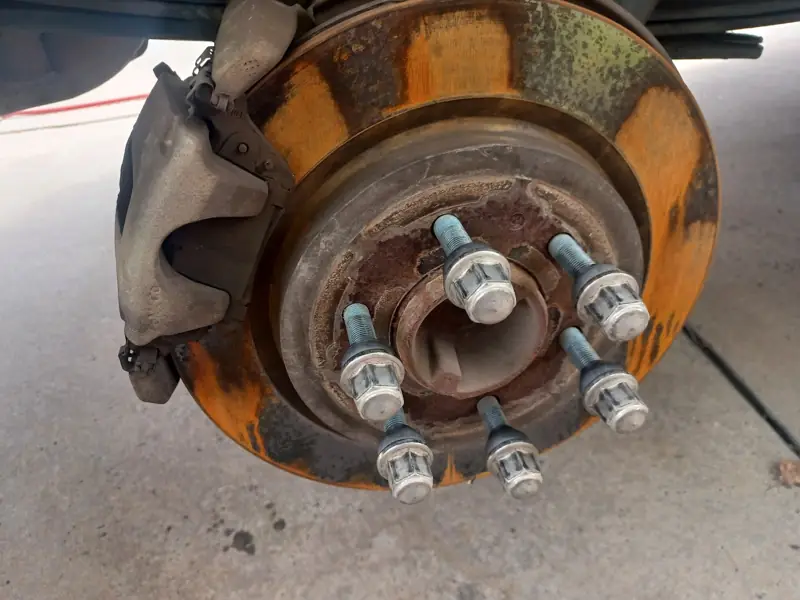
If the pedal pushes back at you in pulses, or the steering wheel shakes when you slow from highway speed, the rotors are likely uneven. People call this warped rotors. Most of the time it is uneven wear or pad material stuck to the rotor in spots. Either way, the fix is usually new rotors or, in some cases, a proper cleanup.
The car pulls to one side
A pull when you brake can point to a stuck caliper, a collapsed brake hose, or uneven pads. A stuck caliper also makes heat, and you may smell it.
A Soft, Spongy, or Sinking Pedal
This one is serious. A soft pedal can mean air in the lines, old fluid, or a leak. A pedal that slowly sinks to the floor while you hold it at a light can mean a leak or a failing master cylinder. Do not wait on this.
A Burning Smell After Driving
A hot, sharp smell near one wheel often means a caliper is dragging. Check whether that wheel feels much hotter than the others after a drive. Be careful, it can be very hot.
A Brake or ABS Light on the Dash
The red brake light can mean low fluid, a problem in the system, or the parking brake left on. The amber ABS light means the antilock system found a fault. The brakes may still work, but the antilock part may not. These lights need a scan to read the stored fault. That is part of diagnostics, and Matt reads the ABS module at your driveway.
Fluid Near a Wheel
Brake fluid is clear to brown and feels slick. A wet spot on the inside of a tire or under the car near a wheel is a reason to call right away.
Brake Pads vs. Rotors
Most people know they need "brakes" but not which part. Here is the simple version.
Pads are the part that wears on purpose. Each wheel has two pads that squeeze a metal disc. The pad material rubs away a little with every stop. New pads are thick. Worn pads are thin. When they get too thin, they need to be replaced.
Rotors are the metal discs the pads squeeze. They wear too, but much more slowly. Each rotor has a minimum thickness stamped on it or listed for your car. Below that number, it cannot soak up heat well and needs to be replaced.
Calipers are the clamps that hold the pads and push them against the rotor. They do not wear out like pads, but they can stick, leak, or seize, especially on cars that sit a lot.
Hoses and lines carry the fluid from the master cylinder to each wheel. Rubber hoses can crack or swell with age.
How to Tell If You Need Rotors Too
Shops often sell rotors with every pad job. Sometimes that is right. Sometimes it is not needed. The honest answer comes from a measurement, not a habit. Rotors should be replaced in these cases.
- They are at or below the minimum thickness.
- They have deep grooves or scoring, often from pads worn down to metal.
- They cause a pulsing pedal or a shaking wheel.
- They have heavy rust or cracks, or a lip so big the new pads cannot sit flat.
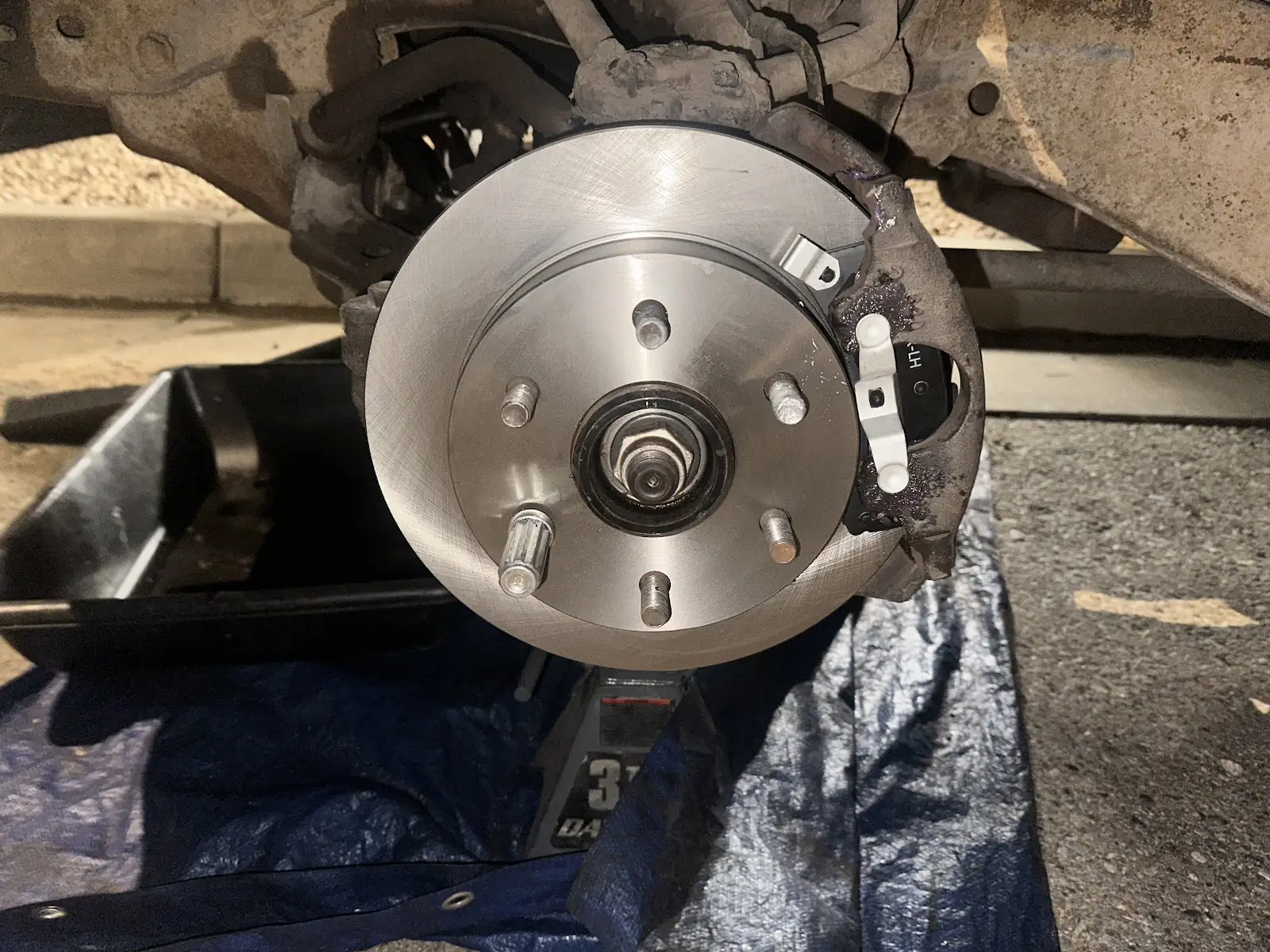
If the rotors are thick, flat, and smooth, new pads and a good cleanup may be all you need. On the brakes page you can read how Matt handles this. He measures your pads and rotors in front of you and replaces only the parts that are worn.
Brake Fluid, the Part Most People Forget
When you press the pedal, you are pushing fluid. That fluid moves the calipers. So the fluid has to be in good shape for the brakes to work well.
Most brake fluid slowly soaks up water from the air over time, even in a sealed system. Water lowers the boiling point of the fluid. On a long downhill, hot fluid with water in it can boil and make small gas bubbles. Gas squeezes. Fluid does not. That is why old fluid can give you a soft pedal right when you need it most.
Water in the fluid also causes rust inside the lines, the calipers, and the ABS unit. Those parts cost a lot more than a fluid change.
Our dry air helps a little, but it does not stop this. The summer monsoon brings real humidity, and heat is what makes wet fluid boil. Most carmakers call for new brake fluid every two to three years. Check your owner's manual for your car's number.
Fresh fluid looks clear or light amber. Dark brown fluid is due. A mechanic can also test it with a strip or a meter. A fluid change, often called a flush or a bleed, pushes the old fluid out of every line and fills the system with new fluid. It is a good time to do it when the brakes are already apart.
What a Driveway Brake Job Includes
A lot of people are surprised that brakes can be done at home. For most cars and trucks, all the job needs is a flat, firm spot, the right tools, and a mechanic who knows the car. Here is how a mobile brake service with Matt goes.
1. You call and describe the problem
Tell Matt what you hear and feel, what the car is, and where it sits. A home driveway, an apartment lot, or a work parking lot are all normal. He gives you a rough idea of cost on the phone. Most days he can come out the same day.
2. He checks all four corners
The car goes up on a jack and stands. The wheels come off. Matt measures pad thickness and rotor thickness while you watch and shows you the numbers. He looks at the calipers, slide pins, hoses, and the fluid. You hear what needs work now and what has a season left.
3. You get the price before any work starts
No work begins until you know the cost and say yes. If the rotors are fine, you are not charged for rotors.
4. The Repair
A typical job includes quality pads and rotors where needed, new hardware, and cleaned and greased slide pins. Calipers and hoses get replaced if they are stuck or damaged. The fluid gets bled when it calls for it. For most cars, one axle of pads and rotors takes one to two hours.
5. The Road Test
New pads need to be bedded in. That means a set of firm stops to lay a thin, even layer of pad material on the rotor. Then the car gets road tested before the tools go back in the truck. The job is done when the car proves it.
You stay home the whole time. No drive to a shop, no waiting room, no ride to work to line up. If you are near home base, see the page for our mobile mechanic in Rio Rancho. If you are across the river, there is one for Albuquerque too.
What Brake Service Costs
There is no single price for a brake job, because no two cars need the same parts. Here is what moves the number.
- What needs replacing. Pads only costs less than pads and rotors. Adding calipers or hoses adds parts and time.
- Front, rear, or both. Most cars wear the front brakes faster, so front jobs are more common. Doing both axles costs more.
- The vehicle. Trucks, SUVs, and many European cars use bigger or pricier parts. Some rear brakes have an electric parking brake that takes more steps.
- Parts quality. Cheap pads can be noisy, dusty, and short lived. Good parts cost a bit more and last longer.
- How long you waited. Catching pads early often saves the rotors. Waiting until they grind usually does not.
For a rough sense, here are general industry ranges seen across the country. They are not a quote from Wrench Services, and your car may land higher or lower.
- Pads only, one axle, often about $150 to $300 at a shop.
- Pads and rotors, one axle, often about $300 to $600, and more on trucks and some imports.
- Brake fluid flush, often about $100 to $150.
- A caliper, often about $250 to $600 per wheel with parts.
Matt bills by the hour. Rates start at $150 per hour, and first time customer and local discounts are available on some jobs. You always hear the price before work begins. If a shop already gave you a brake quote that feels too big, a second opinion costs far less than parts you do not need.
How Often Do Brakes Need Service?
It depends on how and where you drive. Still, some rough numbers help you plan.
- Brake pads often last somewhere between 30,000 and 70,000 miles. City driving and hills wear them faster. Mostly highway driving wears them slower.
- Rotors often last through one or two sets of pads. Measurement decides it, not mileage.
- Brake fluid should be changed every two to three years for most cars, or on the schedule in your manual.
- An inspection makes sense about once a year, or any time a tire gets rotated. It only takes a few minutes with the wheels off.
If you drive the hills between Rio Rancho and the valley every day, or pull a trailer, plan on the low end of those ranges.
A brake check pairs well with other routine work. Plenty of drivers who ask about car tune ups want the same thing, which is one visit that catches small problems before they turn big. Matt also handles fluid services, belts, hoses, batteries, and more as part of mobile auto repair. Ask about it when you call.
Hybrid Brakes Wear Differently
Hybrids slow down partly by using the electric motor to charge the battery. That is called regenerative braking. It means the pads do less work, and hybrid pads often last a long time.
That sounds like good news, and mostly it is. The catch is that brakes that are used lightly can rust and stick. Slide pins seize. Rotors build up rust in spots. Calipers stop moving freely. So a hybrid can have thick pads and still need brake work.
Some hybrids also need a special step before the brakes are touched, so the system does not build pressure while a caliper is off. Hybrids are Matt's specialty. If you drive a Prius, Camry hybrid, or another hybrid, read more on the hybrid service page.
When to Stop Driving and Call
Some brake problems can wait a week. Some cannot. Stop driving if you can, and call, in any of these cases.
- The pedal goes to the floor or keeps sinking.
- You hear loud grinding on every stop.
- The red brake light stays on and the fluid is low.
- You see fluid leaking near a wheel.
- The car pulls hard to one side when you brake.
This is where a mobile mechanic helps most. You do not have to drive a car with bad brakes across town to a shop. The shop comes to the car.
Common Questions About Brake Service
How do I know if I need new brake pads?
Listen for a high squeal when you brake, which is often the wear indicator. Grinding, a longer stopping distance, or pads that look thinner than about a quarter inch through the wheel are other signs. The sure way is to have them measured.
Can a mobile mechanic really do brakes in my driveway?
Yes. Pads, rotors, calipers, hoses, and fluid all get done at your home, apartment lot, or workplace. The car needs a flat, firm spot. Matt checks all four corners, shows you the measurements, and road tests the car before he leaves.
Do I need new rotors every time I replace pads?
No. Rotors get replaced when they are too thin, deeply scored, rusted, or cause a pulsing pedal. If they measure well and look good, new pads and a proper cleanup can be enough.
How much does brake service cost in Albuquerque?
It depends on the car and which parts are worn. Matt bills by the hour, starting at $150, and you hear the price before any work begins. First time customer and local discounts are available on some jobs.
How often should brake fluid be changed?
Most carmakers call for new brake fluid every two to three years. Check your owner's manual for your car. Dark brown fluid is a sign it is due.
Is it safe to drive with grinding brakes?
It is not a good idea. Grinding usually means metal on metal, which damages the rotors and can make the car stop poorly. Drive as little as you can and call for service.
Can you do brake service in Rio Rancho the same day?
Most days, yes. Rio Rancho is home base, so response there is fastest. Hours are Monday to Saturday, 8 AM to 6 PM. Call (505) 608-6677 for availability.
Get Your Brakes Checked at Home
Matt measures first, shows you the numbers, and quotes the job before he starts. Same day most days across Rio Rancho, Albuquerque, and the metro. Call (505) 608-6677 or request a callback.