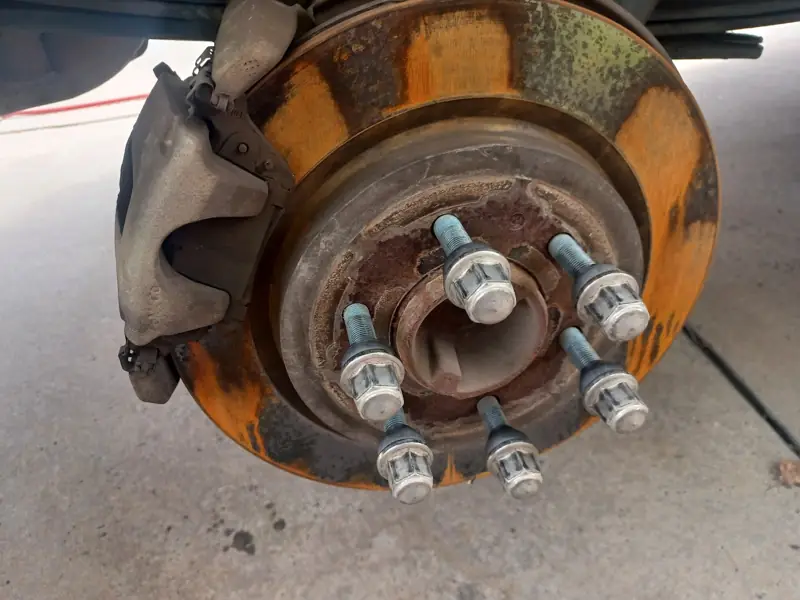
Yes, you can drive 10,000 miles on synthetic oil if your owner's manual lists that interval and you drive in normal conditions. Toyota's own rule drops it to 5,000 miles for dirt roads, towing, short trips in freezing weather and long idling, no matter what oil is in the engine. A lot of Rio Rancho drivers fall in that group without knowing it.
At a glance
- The owner's manual sets the interval, not the oil jug.
- Ten thousand miles also means 12 months, whichever comes first.
- Dirt roads, towing, cold short trips and idling cut it to 5,000.
- Check the oil level between changes. Low oil hurts more than old oil.
- Rio Rancho keeps 116 miles of graded dirt roads. Albuquerque keeps 7.8.
Matt pulls a lot of engine covers in customers' driveways. Oil is the first thing you see in there, and the oil change sticker on the windshield rarely tells the whole story. What matters is which schedule the car was really on and whether anyone kept the level full.
Most of the top answers online stop at "follow your owner's manual." That is right, and it is only half the answer. The manual gives you two numbers, and the second one is the one most people in our area should be using. This guide shows you how to tell which one is yours.
The Short Answer
Ten thousand miles on synthetic oil is real. Plenty of newer cars are built for it. Car and Driver says most modern vehicles have oil change intervals of 7,500 to 10,000 miles, and some makers push it to 12,000 or even 16,000 (Car and Driver). California's recycling agency says the old 3,000 mile rule no longer applies to most cars (CalRecycle).
But 10,000 miles comes with three strings attached.
- Your manual has to list it. The oil being synthetic does not make your engine a 10,000 mile engine.
- It has a time limit too. Car and Driver says to change your oil at least once every 12 months, even if you never hit the miles.
- It assumes normal driving. Dirt roads, towing, cold short trips and long idling are not normal driving in the maker's eyes.
Where the 10,000 Mile Number Came From
Toyota is a good example, because it put the rule in writing. In a service bulletin published on July 8, 2014, Toyota said it began moving to synthetic 0W-20 oil with the 2010 model year. Because that oil holds up better, Toyota extended the oil change interval to 10,000 miles for most vehicles that require it (Toyota TSB T-TT-0262-13 Rev, filed with NHTSA).
Read the fine print in that same bulletin, though.
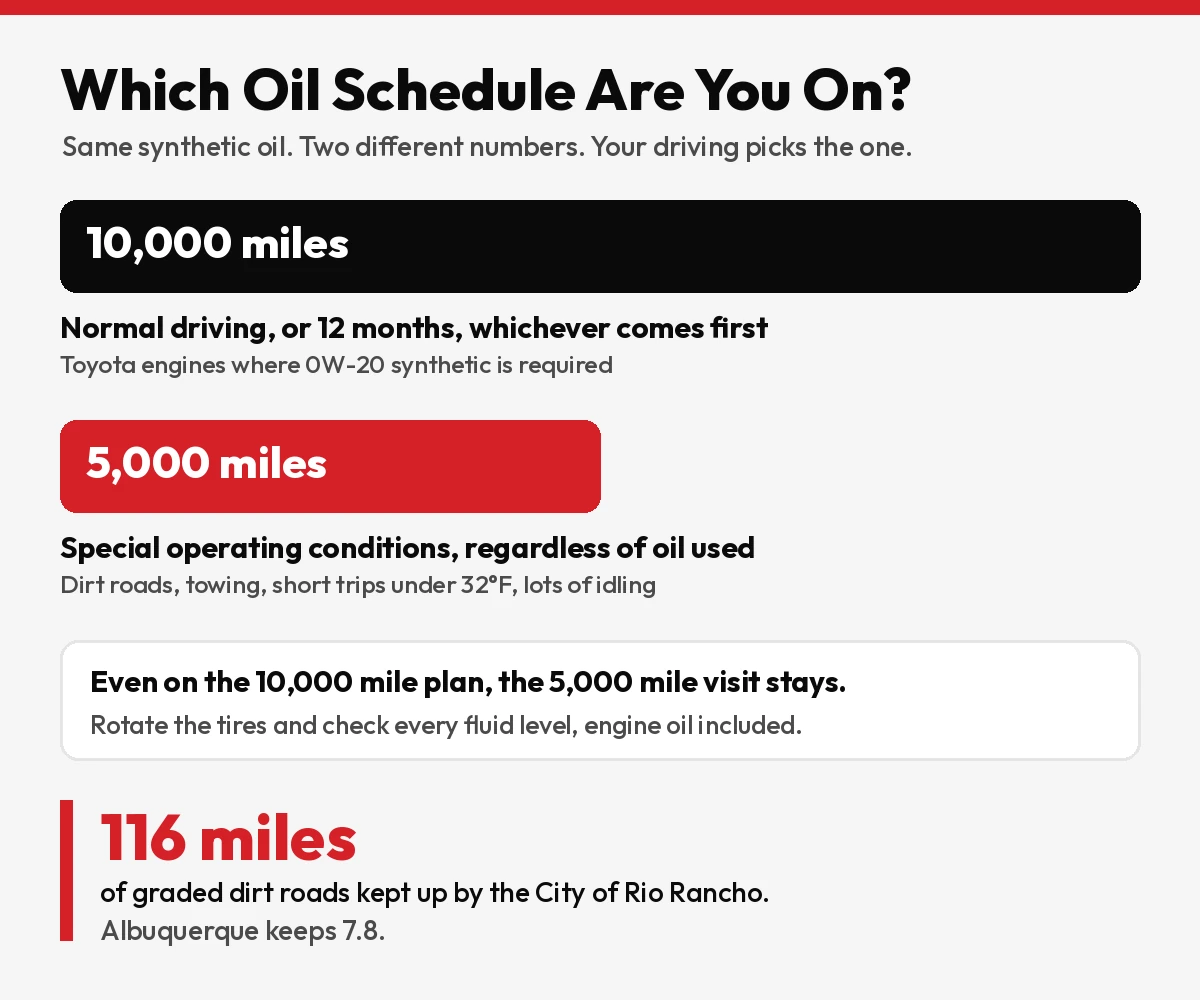
- Only engines where 0W-20 is required got the 10,000 mile interval.
- If 0W-20 is just an option next to 5W-20 or 5W-30, the interval stays at 5,000 miles, even if you pour in 0W-20.
- Two engines were left out. The 2TR-FE four cylinder in the 4Runner and Tacoma and the flex fuel 3UR-FBE V8 in the Tundra and Sequoia stayed at 5,000 miles.
- That flex fuel V8 drops to 2,500 miles when it runs on E85 at least half the time.
So two cars on the same synthetic oil can have two different intervals. The engine decides, not the bottle. That bulletin is from 2014, so check the manual for your exact year, because makers update these numbers.
The Five Things That Cut It to 5,000
Toyota's bulletin lists the "special operating conditions" that send you back to a 5,000 mile oil change, regardless of the oil you use.
| Condition | Why it is hard on oil |
|---|---|
| Driving off road | Dust, heat and heavy load all at once |
| Driving on dirt roads | Dust is hard on the air filter and the oil |
| Towing a trailer | The engine works hard and runs hot for long stretches |
| Repeated short trips under 32°F | The engine never gets warm enough to cook off moisture |
| Extensive idling | The engine runs for hours while the odometer barely moves |
Car and Driver's list lines up with this and adds extreme heat and dusty places. If your manual has no special schedule, Car and Driver says you can play it safe with every 5,000 miles or six months.
Why Rio Rancho Drivers Land on the Short Schedule
Here is the part no national article will tell you. Rio Rancho has a lot of dirt road. On April 22, 2026, nm.news reported the city maintains 116 miles of graded dirt roads, next to 495 miles of paved roads. Albuquerque keeps 7.8 miles of dirt road, Las Cruces 15 and Santa Fe about 50 (nm.news).
If your daily drive starts on one of those roads, your car meets Toyota's own "dirt roads" line every single day. That is a 5,000 mile car, even if it never leaves the metro.
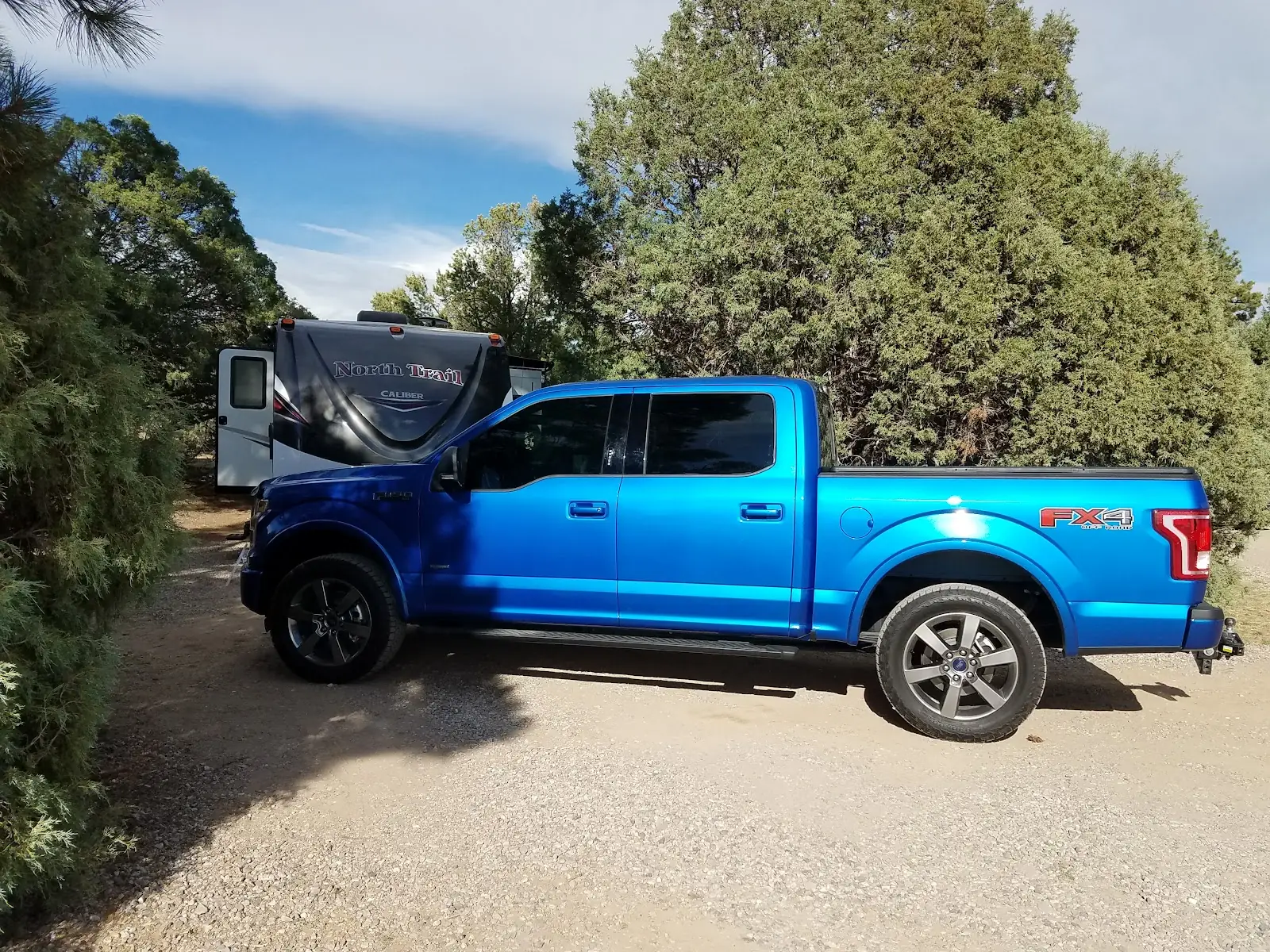
Truck fixed at the customer's home
A few other local habits push you the same way.
- Trucks that tow. If you pull a camper, a horse trailer or a work trailer, towing is on the list.
- Cold morning errands. A five minute run to the store on a winter morning below freezing is the "short trips under 32°F" line.
- Idling in the driveway. Warming the truck up for ten minutes, or sitting in it with the AC on, adds engine hours with no miles.
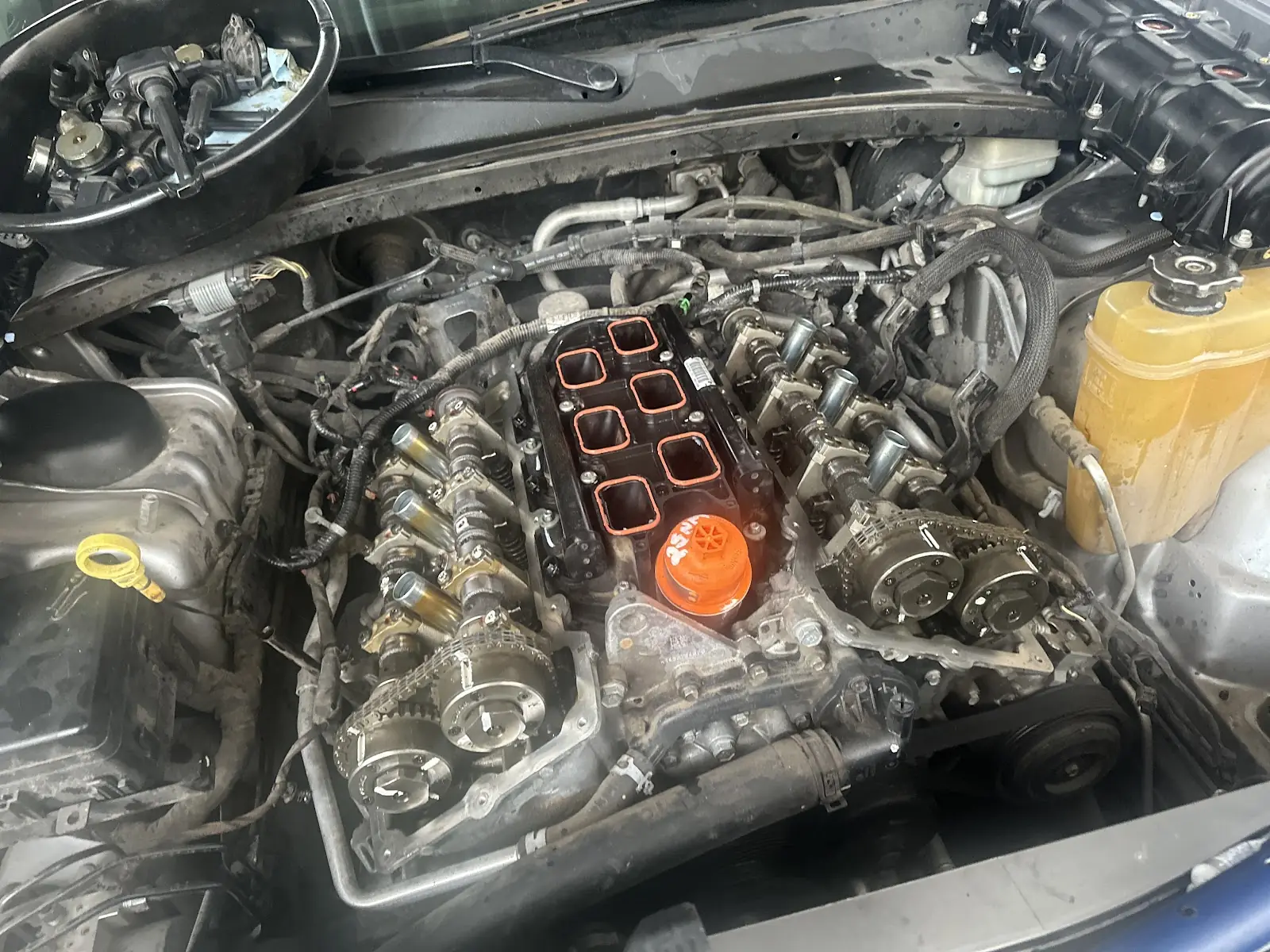
Under those covers, the cams, chains and timing gears all ride on a thin film of oil. Dirty or low oil shows up there first.
Which Schedule Are You On?
Find your driving in the left column. These follow the terms in Toyota's bulletin. Your own manual has the final word for your car.
| How you drive | Schedule to use |
|---|---|
| Mostly paved roads, longer trips, no trailer | The normal interval in your manual, often 10,000 miles or 12 months |
| You live on or drive a dirt road most days | The special schedule, 5,000 miles |
| You tow a camper or trailer | The special schedule, 5,000 miles |
| Lots of short winter trips below freezing | The special schedule, 5,000 miles |
| Long idling, delivery or ride share work | The special schedule, 5,000 miles |
| Your manual gives no special schedule | Car and Driver's safe pick, 5,000 miles or six months |
| You barely drive | At least once every 12 months |
The Step Everyone Skips. Check the Level
Here is the line in Toyota's bulletin that almost nobody quotes. On cars with a 10,000 mile interval, the 5,000 mile service did not go away. The tires still get rotated, and every fluid level, engine oil included, still gets checked and topped off at 5,000 miles.
That matters because engines use oil between changes. Car and Driver says to check the level at each fuel stop and top it off. An engine that drinks oil and is never checked can fail outright.
So stretching to 10,000 miles is only safe if somebody pulls the dipstick in between. It takes two minutes.
- Park on flat ground and let the engine sit a few minutes.
- Pull the dipstick, wipe it, push it all the way back in, then pull it again.
- The oil should sit between the two marks. Add a little at a time if it is low.
- Write down how much you added. A car that needs a quart every few weeks needs a mechanic to look at it.
Want proof instead of a guess? Car and Driver points to oil analysis labs. You send a sample from an oil change and get back a report on the oil's condition and any wear metals. It is the only way to know for sure if your engine can go longer.
Is Synthetic Worth It Over Conventional?
For most cars, yes. On June 6, 2017, AAA said synthetic oils did an average of 47 percent better than conventional oils across a set of industry standard tests. AAA said the gain matters most for turbo engines and for cars that drive in stop and go traffic, tow heavy loads or run in extreme heat or cold (AAA Newsroom).
AAA was fair about it, too. A conventional oil that meets the maker's spec will not harm your engine. And if your manual calls for synthetic, Car and Driver says to keep using it, because running conventional in that engine risks problems later.
The take we would leave you with is simple. Better oil buys you margin. It does not change what kind of driving you do.
Hybrids and Oil Life Monitors
Oil life monitors. Many newer cars do not give you a fixed mileage. A monitor tracks trip length, engine temperature and other data, then tells you when to change the oil. Trust it, and still change the oil at least once a year, as Car and Driver advises. A monitor does not replace pulling the dipstick.
Hybrids. Toyota's 0W-20 bulletin is listed for the Prius, and the same special conditions apply. In a Toyota hybrid the gas engine shuts off a lot in town, so it can go a long time with little engine run time. The 12 month limit still counts. Hybrids are the specialty at Wrench Services. If yours has a warning light, read about hybrid battery service before you assume the worst.
Signs Your Engine Needs a Mechanic, Not Just Oil
An oil change will not fix these. Get them looked at.
- The oil pressure light comes on while you drive. Pull over and shut it off.
- You add a quart or more between changes.
- Blue smoke from the tailpipe, or a burning oil smell under the hood.
- Oil spots under the car in the driveway.
- A ticking or knocking noise that gets louder as the engine warms up.
- Oil that looks milky on the dipstick.
Matt does engine diagnostics at your driveway and finds the cause before anyone talks about parts. Leaks, sensors and other repairs are part of mobile auto repair. Rates start at $150 per hour, and you hear the price before any work begins. If a big engine quote has you thinking about giving up on the car, read when a car is not worth fixing first. And if you are shopping for a used car, ask for the oil change records, then book a pre purchase inspection.
Common Questions About Synthetic Oil Intervals
How many miles can you safely drive with synthetic oil?
As many as your owner's manual lists for normal driving. Car and Driver says most modern cars fall between 7,500 and 10,000 miles. If you drive dirt roads, tow, make short trips in freezing weather or idle a lot, use the shorter special schedule, which is 5,000 miles on Toyotas.
Can you really go 20,000 miles on synthetic oil?
Only if your owner's manual says so. Car and Driver puts the longest factory intervals at about 12,000 to 16,000 miles. The number on an oil jug is not the same as your engine maker's interval, and the 12 month limit still applies.
Do you have to change synthetic oil every 12 months even if you don't drive much?
Yes. Car and Driver says to change your oil at least once every 12 months, even if the car mostly sits. Oil breaks down over time, not just over miles.
Is it okay if you go 1000 miles over an oil change?
Going a little over once is not the end of the world. Check the oil level right away, top it off if it is low, and get the change done soon. Making a habit of it is what wears an engine down.
What happens if I'm overdue for an oil change at 8000 miles?
If your car is on a 5,000 mile schedule, you are well past due. Check the level first, because low oil is the real danger. Then get it changed this week. If the oil pressure light came on at any point, have the engine checked too.
Does driving on dirt roads mean more oil changes?
On a Toyota, yes. Toyota's service bulletin lists driving on dirt roads as a special operating condition that calls for a 5,000 mile oil change, no matter which oil you use. Other makers have similar lists in the owner's manual.
Oil Light On or Losing Oil? Have It Checked at Home
Matt finds out why the engine is using or leaking oil, right where the car is parked, and tells you what it costs before he starts. Call (505) 608-6677 or request a callback.
Sources
- Toyota Technical Service Bulletin T-TT-0262-13 Rev, 0W-20 Oil and Extended Oil Change Intervals, published July 8, 2014, NHTSA bulletin 10132741.
- Car and Driver, How Often Should You Change Synthetic Oil?, June 26, 2024.
- AAA Newsroom, AAA Spills the Truth on Oil Changes, June 6, 2017.
- CalRecycle, Check Your Number, read October 15, 2026.
- nm.news, Rio Rancho Road Construction Picks Up This Summer, April 22, 2026.