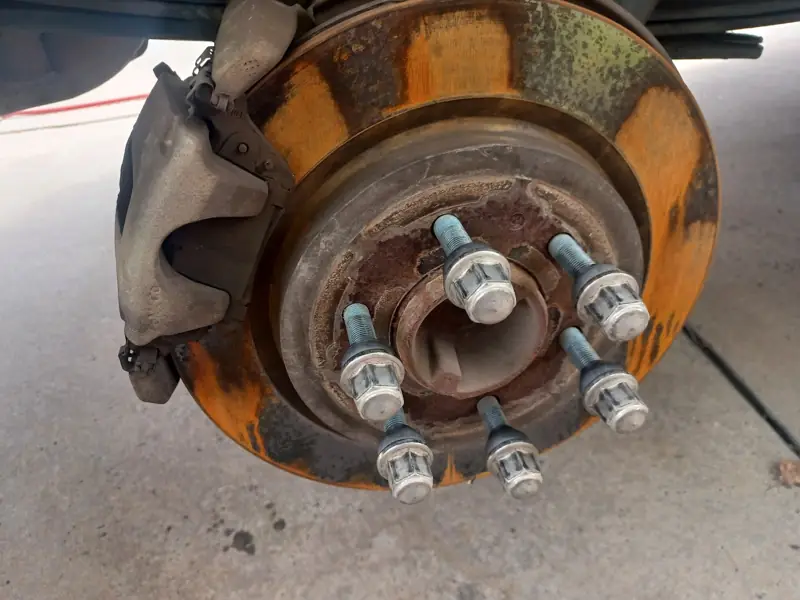
A car is not worth fixing when it will still be unsafe after the repair, when the repair costs more than the car will be worth once it is fixed, or when big failures keep stacking up. Before you decide, get the problem tested, not guessed. A wrong diagnosis is the most common reason a good car gets junked.
At a glance
- Test the problem first. A code is a clue, not a verdict.
- Compare the repair to what the car is worth after the fix.
- Spread the bill over the months it buys you, then compare it to a car payment.
- One big repair is normal. The third big one this year is a pattern.
- Safety and structure come first. Rust through the frame ends the talk.
You got the call or the text with a big number on it. Now you are standing in the driveway doing math in your head. Fix it, or let it go?
Most articles answer with one rule, like fixing only when the repair is less than half the car's value. Those rules are a fine start. They also skip the part that decides most of these calls, which is whether the diagnosis behind that big number is even right. This guide walks through five checks in the order Matt would run them, with the real monthly math and the local rules that matter here.
The Short Answer
A car is usually not worth fixing in three cases.
- It will not be safe after the repair. Rust through the frame, a bent structure, or damage you cannot fully fix.
- The repair costs more than the car will be worth once fixed. Experian puts it this way. Think about selling when repair costs come close to, or pass, the car's market value after the work is done (Experian).
- The failures keep coming. One big repair is normal on an older car. A new big one every couple of months is a pattern.
Everything else is a judgment call, and the five checks below make it an easy one.
Check 1. Is the Diagnosis Tested?
This check comes first because it changes every number after it. A check engine code tells you where to look. It does not tell you what broke. One code can point at a cheap sensor, a cracked hose, or a part that costs ten times more.
When a quote says "needs a new transmission" or "needs an engine," ask how they know. Was the part tested? Was the fluid checked? Was live data read? A car that "needs a transmission" sometimes needs a sensor, a solenoid, or a software update. A car that "needs an engine" sometimes needs a coil and a set of plugs.
So before you junk it, pay for a real engine diagnostic or a second opinion. That costs far less than a car payment. Matt tests the part behind the code at your driveway, and most diagnostics fit in the first hour. Rates start at $150 per hour, and you hear the price before any work begins.
Check 2. Will It Be Safe After the Fix?
Some cars are worth fixing on paper and still a bad idea. Ask one plain question. After this repair, would you put your kids in it on I 25 at rush hour?
- Frame or structural rust that goes through the metal is the big one. You cannot bolt on a fix for that.
- A bent frame or unibody from a crash changes how the car handles and how it protects you.
- Brakes, tires, steering and suspension are safety parts, but they are normal wear items. They are almost never a reason to give up on a car.
Also check for open recalls. Type your 17 character VIN into the federal recall lookup at NHTSA. The VIN is on the lower left of the windshield and on your registration card. NHTSA says it monitors each recall so owners get a safe, free and effective remedy. If your problem part is on an open recall, you should not be paying for it.
Check 3. What Is the Car Worth Once Fixed?
Look up the value on Kelley Blue Book or Edmunds, and use the condition the car will be in after the repair, not today. Ramsey Solutions uses a clean example. A 2014 Civic with about 100,000 miles worth around $7,000 is worth a $4,000 transmission, because you end up with a $7,000 car (Ramsey Solutions).
Flip it around. If the car is worth $2,500 running and the repair is $3,500, you are paying $1,000 more than you could ever get back. That is the classic "not worth it" case.
Here is where book value lies to you, though. Book value says what a stranger would pay for your car. It does not say what it would cost you to replace it with one you trust. That is what Check 4 is for.
Check 4. Do the Monthly Math
This is the part most people skip. Do not compare the repair to the car's value. Compare it to what the next car costs you every month.
On September 10, 2026, Experian reported the average monthly payment in the second quarter of 2026 was $765 for a new car and $542 for a used one, with average rates of 6.35% new and 11.19% used (Experian). AAA's 2025 study put the full cost of owning and running a new car at $11,577 a year, about $965 a month, and $4,334 of that is lost value each year (AAA).
Now spread your repair over the months it should buy you. These are worked examples, not quotes.
| Repair bill | Months of driving it buys | Cost per month | Average used payment |
|---|---|---|---|
| $1,200 | 12 | $100 | $542 |
| $2,400 | 12 | $200 | $542 |
| $2,400 | 24 | $100 | $542 |
| $4,000 | 24 | about $167 | $542 |
Even a big repair usually beats a payment, as long as the rest of the car is sound. The math flips when the car needs another big repair right after this one. That is Check 5.
One more line people forget. Experian also says to count registration, taxes and loan payments when you compare fixing against buying, not just the sticker price.
Check 5. Is This a Repair or a Pattern?
A worn part is a repair. A car that eats a big part every few months is a pattern. Ramsey's line is useful here. If a car worth about $7,000 is costing you $500 to $700 every couple of months, it is time to think about replacing it.
Add up the last 12 months of repair bills. Then ask the mechanic what else is close to the end. A good mechanic will tell you what is urgent, what can wait, and what is coming next. If the answer is "the engine is fine, it just needed this," fix it. If the answer is "this, then the transmission is next, and the mounts are shot," that is the pattern.
Repairs That Are Usually Worth It, and the Ones That Are Not
This is a general guide for an older car that is otherwise sound. Your car can be the exception, which is why Check 1 comes first.
| Usually worth fixing | Think hard first |
|---|---|
| Brakes, pads, rotors, calipers | A failed engine with internal damage on a high mile car |
| Battery, alternator, starter | A failed transmission on a car worth less than the job |
| Radiator, water pump, thermostat, hoses | Rust through the frame or unibody |
| Sensors, coils, plugs, belts | Two or more big systems failing at the same time |
| CV axles, control arms, wheel bearings | Engine damage from overheating that was driven on |
| Hybrid packs with a few weak modules | Repeat repairs on the same system that never stay fixed |
Most of the left column is driveway work. Matt handles batteries, alternators, starters, cooling, suspension, axles and electrical as part of mobile auto repair, so the fix does not come with a tow bill on top.
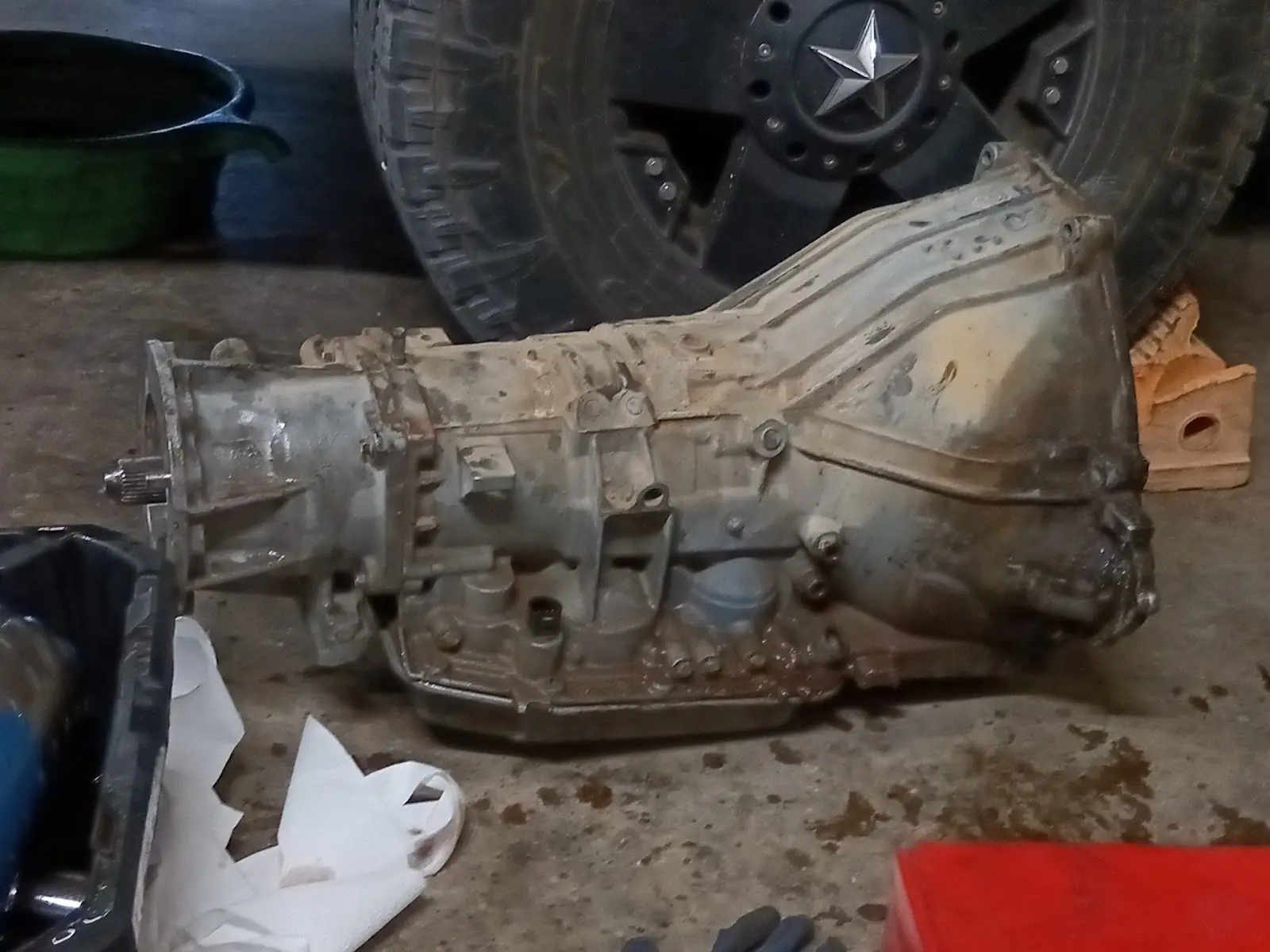
Transmission out for service
What Changes the Answer in Albuquerque and Rio Rancho
The emissions test. If your car is registered in Albuquerque or anywhere in Bernalillo County, it has to pass an emissions test. That covers gas cars and hybrids from 1992 and newer under 10,001 pounds. Diesels and fully electric cars are exempt, and new cars are exempt for four years. A test is also needed when the car changes owners. If it fails, you get one free retest if it passes within 90 days (City of Albuquerque Air Care).
What that means for you. A car that fails emissions is not done. An emissions failure can come from something as small as a sensor or a vacuum leak, and a tested diagnosis tells you which. It also means a failing car is harder to sell, because the buyer needs a passing test too. So fixing the emissions fault often makes sense either way.
The commute. A lot of Rio Rancho drivers cross the river into Albuquerque every day. If one car carries that whole load, the real cost of a breakdown is lost work, not just the repair. That is a reason to fix a sound car early and not wait for the tow.
Old Hybrids Deserve a Real Test
A hybrid warning light on an older Prius or Camry hybrid is where a lot of good cars get given away. The dealer answer is usually a full new pack. Most packs fail a few cells at a time, and testing each module shows whether cell service can bring the pack back or whether it really needs a full replacement.
Hybrids are the specialty at Wrench Services. Matt tests the high voltage pack module by module at your driveway and gives you the numbers. Read more on the hybrid battery service page before you trade in a hybrid with a warning light.
Before You Sign or Sell
Run this list. It takes an evening and can save you a car.
- Get the price in writing, with the parts and the labor spelled out.
- Ask how the failed part was tested, not just which code came up.
- Check the VIN for open recalls.
- Look up the value after the repair on Kelley Blue Book or Edmunds.
- Spread the bill over 12 or 24 months and compare it to $542 a month.
- Add up the last 12 months of repair bills.
- Ask what else is close to failing.
If you do decide to replace it, do not buy the next car blind. A pre purchase inspection at the seller's driveway is how you avoid trading one problem car for another.
Common Questions About Fixing an Older Car
At what point is a car not worth fixing?
When it will not be safe after the repair, when the repair costs more than the car will be worth once fixed, or when big repairs keep coming every few months. Get the problem tested first, because a wrong diagnosis makes a good car look like a lost cause.
When should you stop fixing your car?
Stop when the frame or body structure is rusted or bent, or when you are paying for a new big repair every couple of months. A single big repair on a car that is otherwise sound is usually still cheaper than a car payment.
Is it worth fixing a car with over 200,000 miles?
It can be. Mileage alone does not decide it. A well kept car with a sound engine, transmission and frame can be worth a brake job or an alternator at any mileage. Look at what else is close to failing, not just the odometer.
Is it worth putting a new transmission in an old car?
It depends on what the car is worth once fixed and on the rest of the car. Make sure the transmission was actually tested first, because shifting problems can come from sensors, solenoids or fluid. If the rest of the car is solid, the repair often costs less than a year of payments.
Should I fix my car or buy a new one?
Spread the repair cost over the months it will buy you and compare that to a payment. Experian reported an average used car payment of $542 a month in the second quarter of 2026. A $2,400 repair that buys a year of driving works out to $200 a month.
Can a mobile mechanic tell me if my car is worth fixing?
Yes. Matt tests the problem at your driveway and tells you what failed, what it costs to fix, and what is urgent versus what can wait. Rates start at $150 per hour, and you hear the price before any work begins.
Get a Straight Answer Before You Give Up on It
Matt tests the problem where the car sits, tells you what failed and what it costs, and is honest when the quote you already have is fair. Call (505) 608-6677 or request a callback.
Sources
- Experian, Average Car Payment, dated September 10, 2026, second quarter 2026 data.
- AAA Newsroom, Your Driving Costs, September 16, 2025.
- Ramsey Solutions, Should I Repair or Replace My Car, May 23, 2024.
- Experian, Should I Repair My Car or Sell It, November 11, 2023.
- City of Albuquerque, Air Care Vehicle Emissions Testing, read October 10, 2026.
- NHTSA, Check for Recalls, read October 10, 2026.